
Crime risk at the address, for the business that operates there
CrimeGrade estimates crime at about 66-meter detail across the U.S., measures each crime against what it happens to, and scores each business against the typical store of its type.
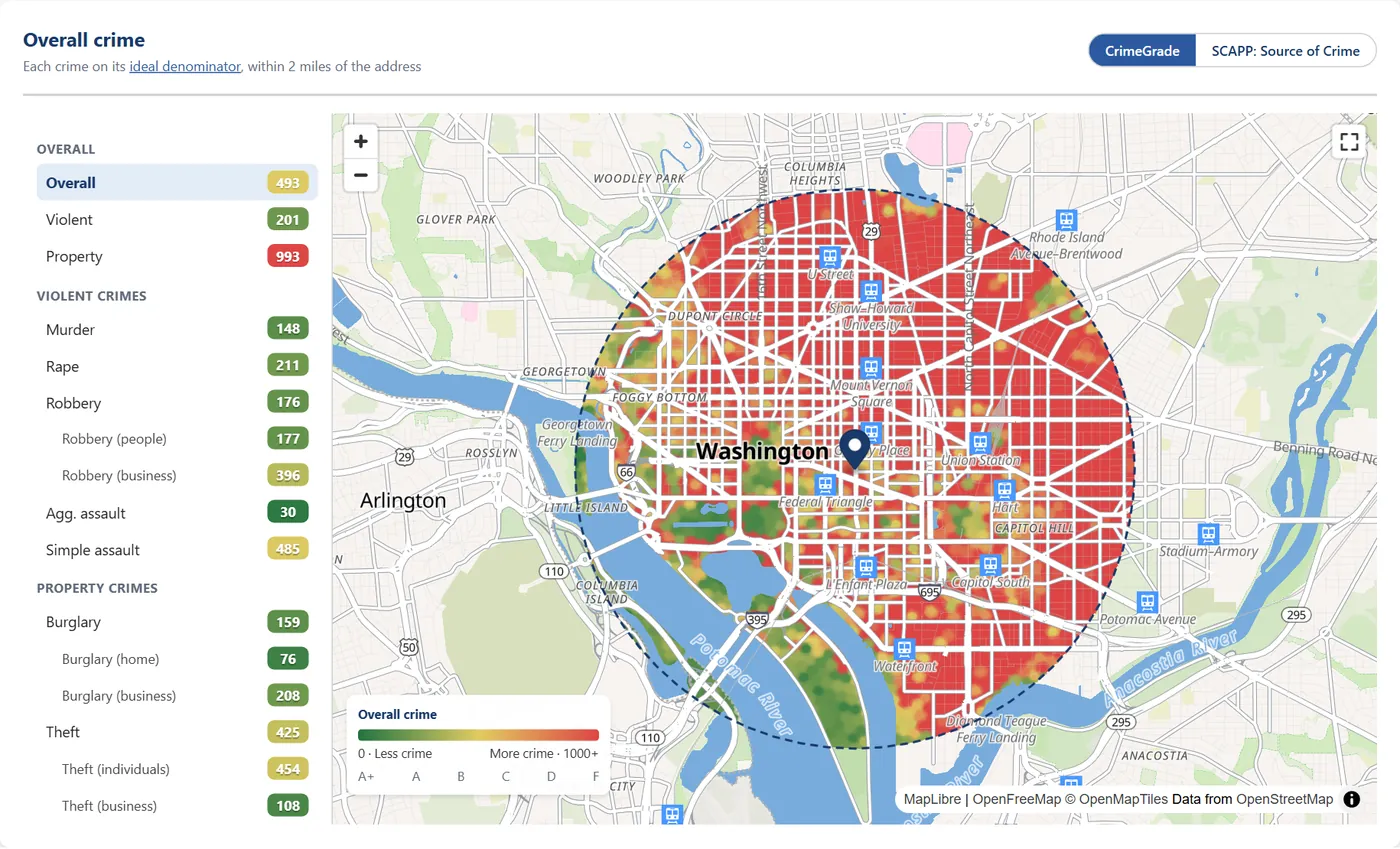
Estimates for the business at the address, by type
Set a business type on a report and it adds a store score for each crime. A store score of 100 matches the typical store of that type nationwide. Chain stores are compared with chains, and independent stores with independents. A score of 200 means about twice the typical store's incidents.
The weighted store score combines the crimes with weights set for each business type, by each crime's share of a typical store's crime losses. Shoplifting carries most of the weight at retail stores, burglary at most other businesses, and assault at bars, hospitals, fast-food restaurants and hotels.
Guard hours, fixtures and audits can follow the risk for that kind of store at that address.
The store score
Each crime measured against what it happens to
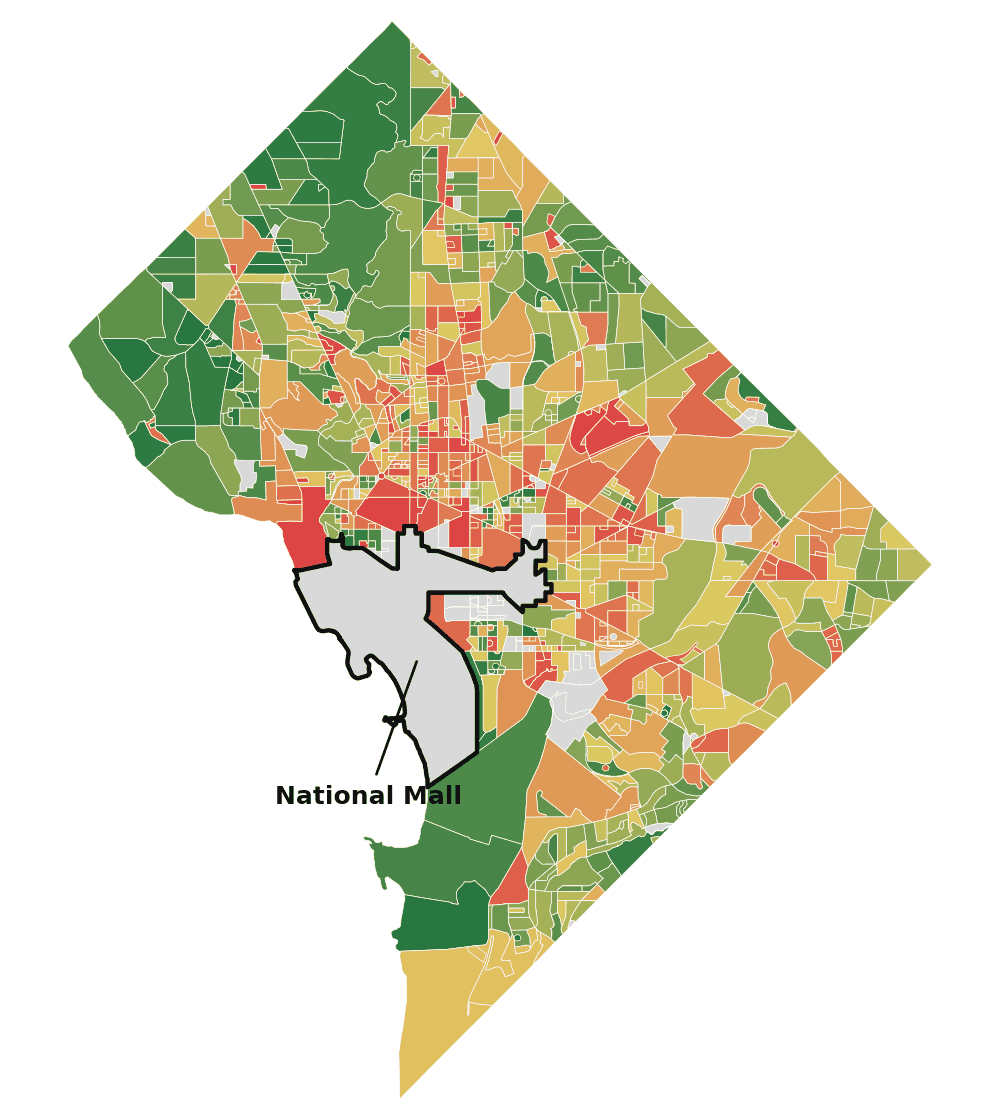
A per-resident crime rate divides crime by the people who live in an area. Downtowns, parks and shopping districts have few residents and many visitors, so per-resident rates make them read as the most dangerous ground in a city. CrimeGrade measures each crime against what it targets: street robbery against the time people spend in public, vehicle theft against parking spaces, home burglary against households.
Theft per resident
Theft on its ideal denominator
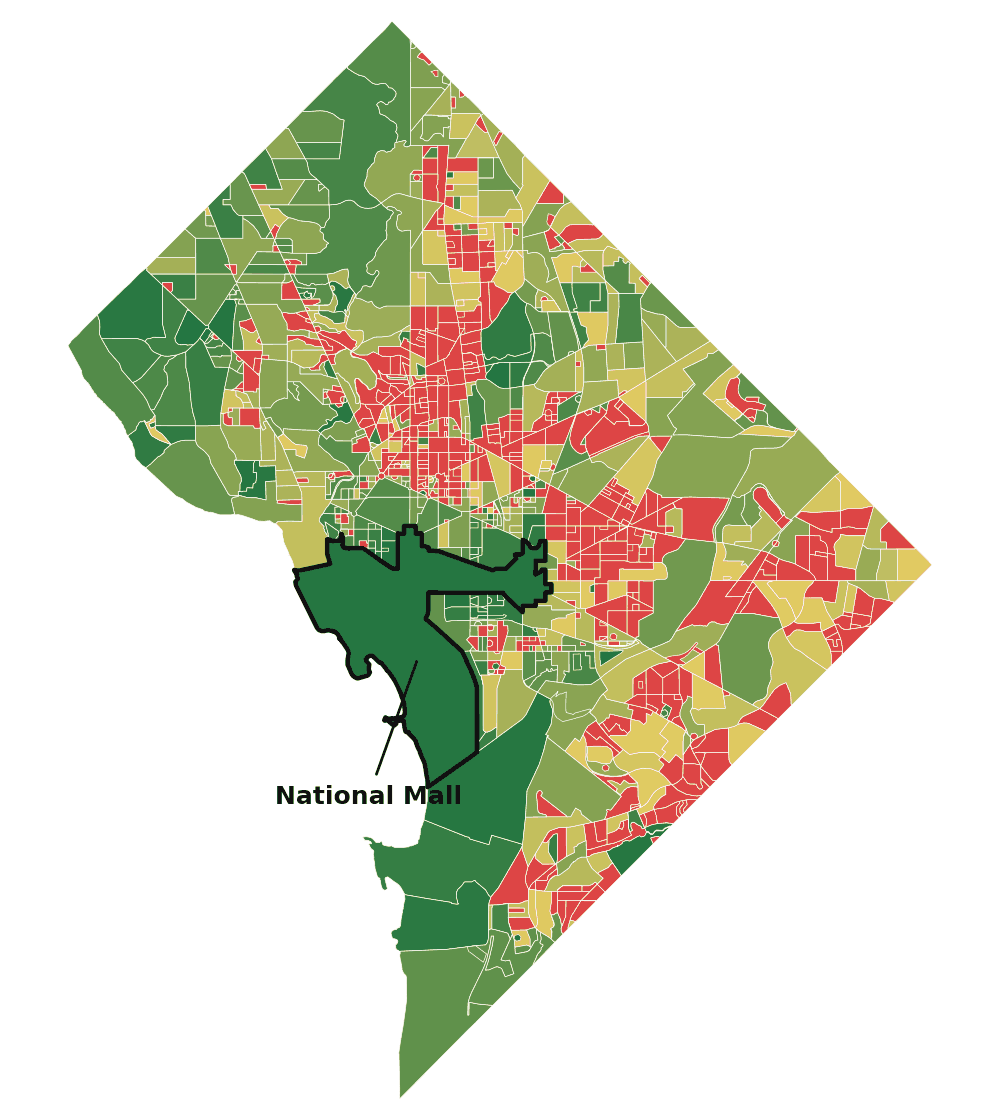
A store in a busy district is scored on the risk to the people and cars that are there, which is the risk the store carries. How each crime is measured
SCAPP: Source of Crime for existing risk models
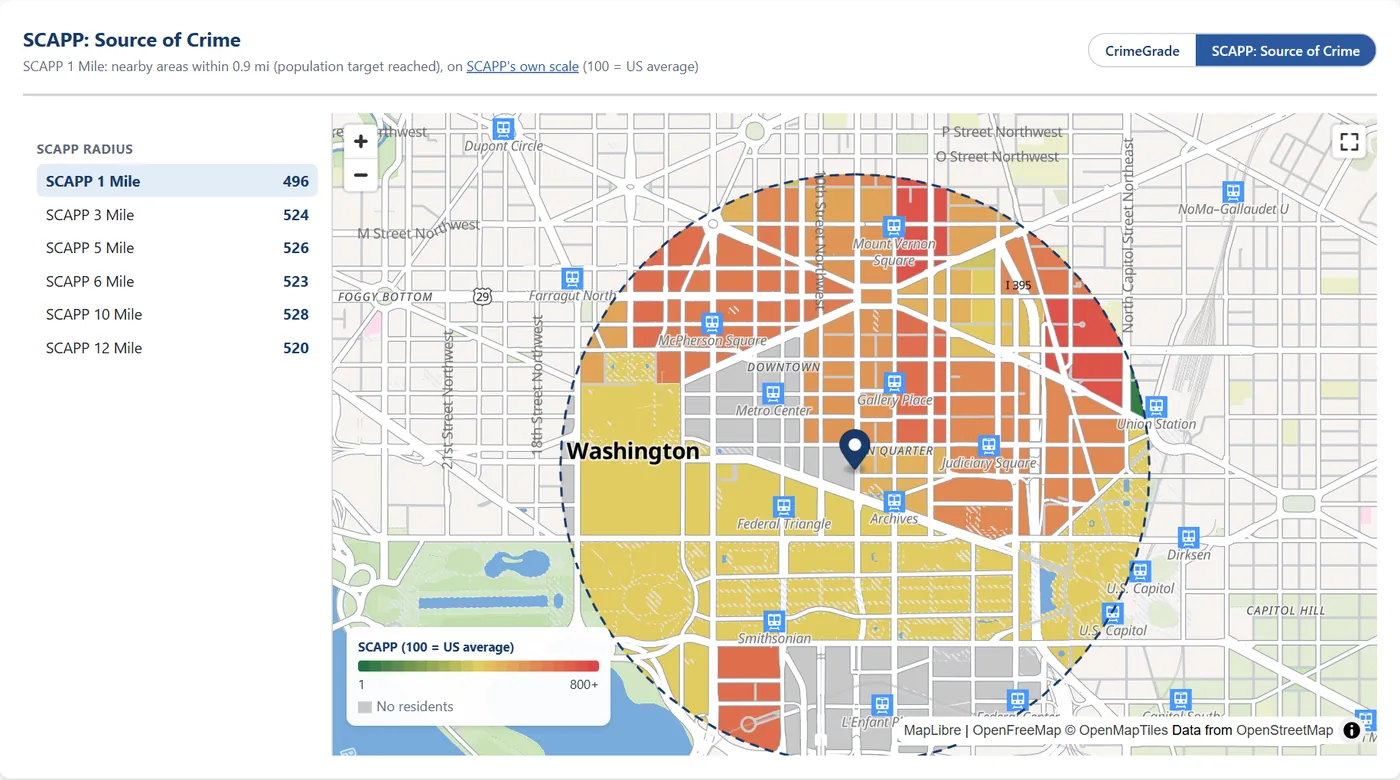
Many security teams run risk models built on legacy source-of-crime reports, which estimate where people likely to commit crimes live. SCAPP: Source of Crime is CrimeGrade's own estimate on that familiar scale, with 100 as the U.S. average, so those models keep running through a switch.
- Site scores at radii from 1 to 12 miles, labeled SCAPP 1 Mile, SCAPP 3 Mile and so on
- Every field in a CSV export, with full scores for modeling
- CrimeGrade's scores for where crime happens, in the same report
Source-of-crime scores describe where offenders may live. A store's losses happen where crime happens, and that is what CrimeGrade's scores measure.
Teams can move to CrimeGrade without rebuilding the models they rely on today.
Where teams use it
Protect the stores that carry the risk
Compare locations by the crimes that cost each type of store the most, then set guard hours, fixtures and audits to match.
Check a site before the lease
Score a planned address and its 1-, 3- and 5-mile rings, with written advice for new stores.
Size coverage to the area
Yearly crime counts in each ring show the volume a patrol or guard plan has to cover.
Review commercial exposure
Score commercial properties and whole portfolios at the address and in the area around it.
Pricing
Launch special
From $149 a location for 20 or more reports in an order.
Organizations that order while launch pricing is offered keep launch prices for two years.
Enterprise
100+ locations: custom modeling on your own loss data, and discounts when switching from another provider.
Enterprise